Chicago, Illinois
CHI12:00 PM

A small brokerage up against Coventry Direct and Abacus Life Settlements. A new website and SEO gameplan moved its average keyword position from 53rd to page one in fourteen months, and it has held there since, putting it on page one alongside billion-dollar competitors.

The problem
Life settlements is a category owned by national, billion-dollar players with television budgets. Windsor is a small brokerage with a better answer for most sellers and no way for them to find it.
In January 2025 the site ranked 53rd on average for its keywords. Nobody scrolls to page six.
Part one · SEO
SEO, or search engine optimization, is the work of getting a website to show up in Google without paying for ads. That was the plan. Paid ads were the bridge while it took hold. The rebuild came first, because nothing else works on a slow site that Google cannot make sense of.
Every page rewritten around the questions sellers actually search for, with a settlement calculator as the main way in. The calculator now produces most of the qualified leads.
Marketers call these SEO silos. Every page now lives in one of a few sections, such as life settlements or viatical settlements, and the articles in each section link back to one main page. Google rewards sites it can understand.
We added schema, a layer of code that tells Google exactly what each page is about. We also removed the drag-and-drop page builder plugins that had made the old site slow. The results are below.
When respected sites link to yours, Google treats it as a vote of confidence. Link building is provided by the incredible team at Citation Labs. They build those links slowly and carefully, and we track the rankings they move every month.
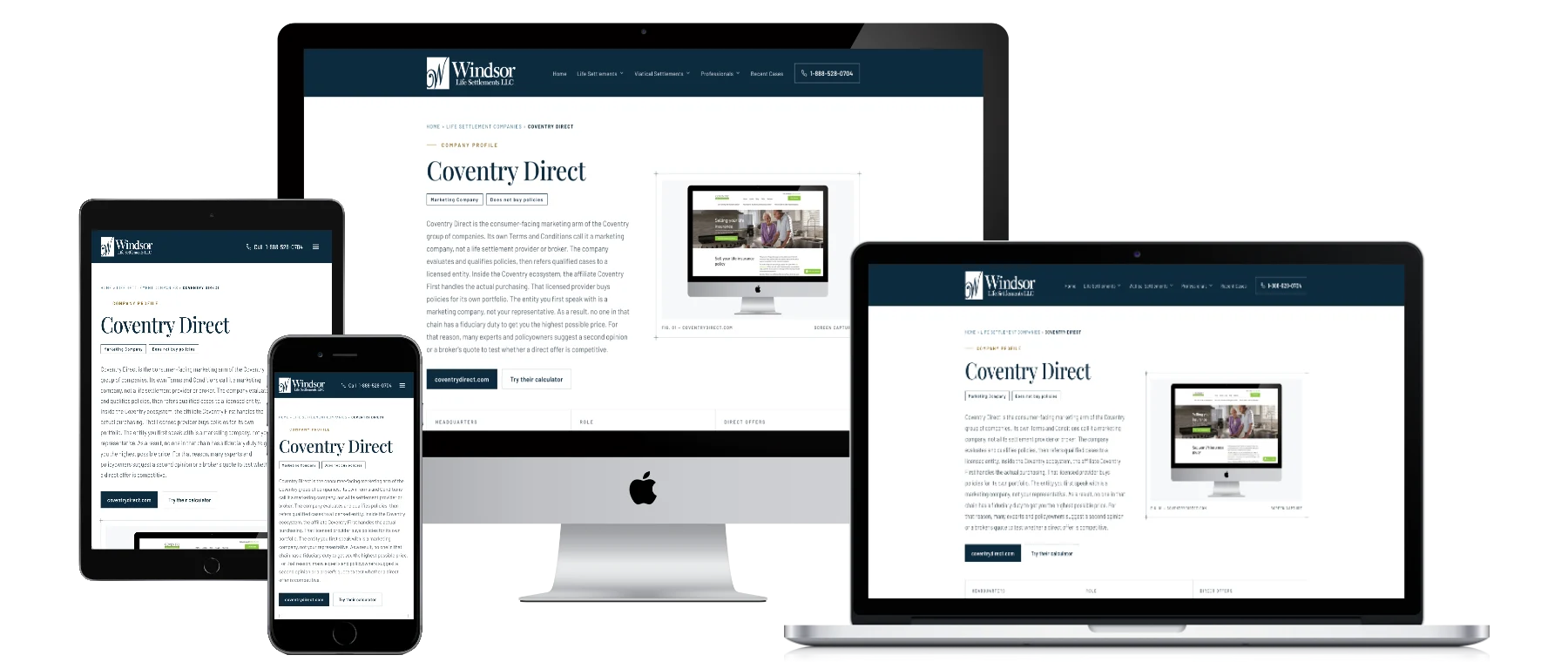
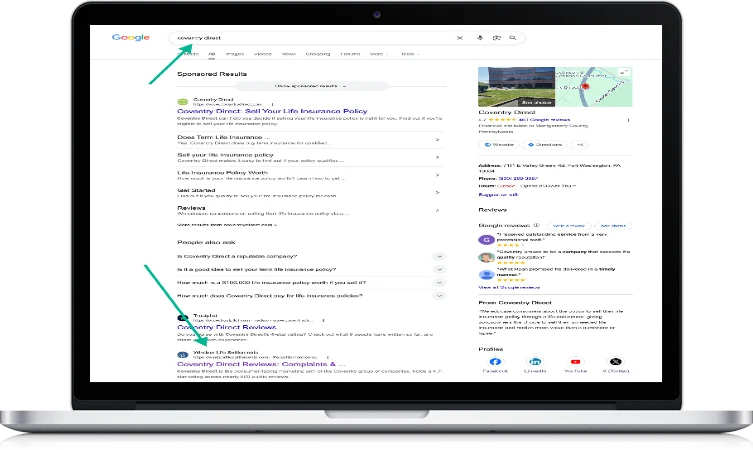
Windsor is a broker. Its job is to shop a policy to many buyers and let them compete, which usually means a better offer than going to any one company direct. To make that case, we wrote an honest profile of every major life settlement company, 44 pages so far. The directory is a useful resource for policyowners going it alone, it shows that Windsor knows all the players, and it brings in people searching for those companies by name. Search "Coventry Direct" today and Windsor is the second result, right under Coventry itself.
Search Console, GA4, Google Ads and Salesforce in a single monthly view, so rankings, traffic and leads could be read together.
Before and after
Google grades every website out of 100 in four areas: how fast it loads, how easy it is for people with disabilities to use, whether it follows good coding rules, and whether it is set up so Google can read it. The old site took 20 seconds to fully load on a phone. The new one loads in about a second.
The directory
Windsor is a broker. It does not buy policies itself; it shops each one to many buyers and lets them bid against each other, which usually means a better offer than going to any single company direct. That is a hard thing to explain in a headline, so we showed it instead. We wrote a plain, fair profile of every major life settlement company on the market: who they are, who they will buy from, what their reviews say, and who owns them. Forty-four so far.
The profiles do three jobs at once. They help policyowners who are going it alone. They show that Windsor knows every player in the room. And they catch people searching for those companies by name, which is traffic the competitors are paying for. Search "Coventry Direct" and Windsor's profile is the second result, right under Coventry itself. The same is true for several others.
SEO · the numbers
Taller is better; the top of the chart is first place. The site started the year in 53rd and finished the period at 9.5, with 28 keywords in the top three and 38 in the top ten. The October jump to 12.8 is the month the new site indexed; March 2026 is the first month on page one.
Eight months of roughly 250 users, then 966 in October, 2,560 in November and 2,291 in December. 7,808 users for the year, more than half of them in the last quarter.
Part two · Paid search
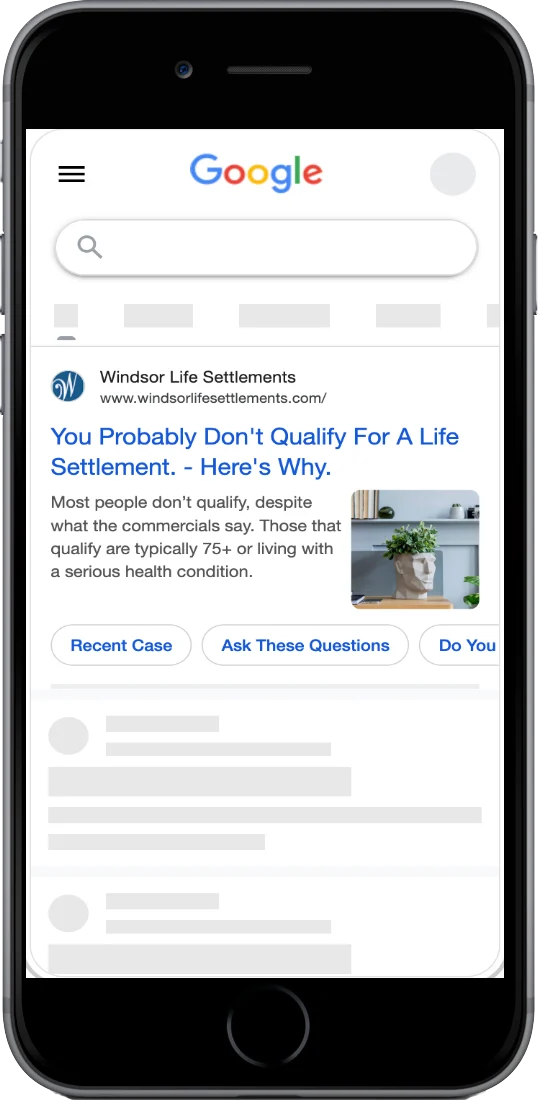
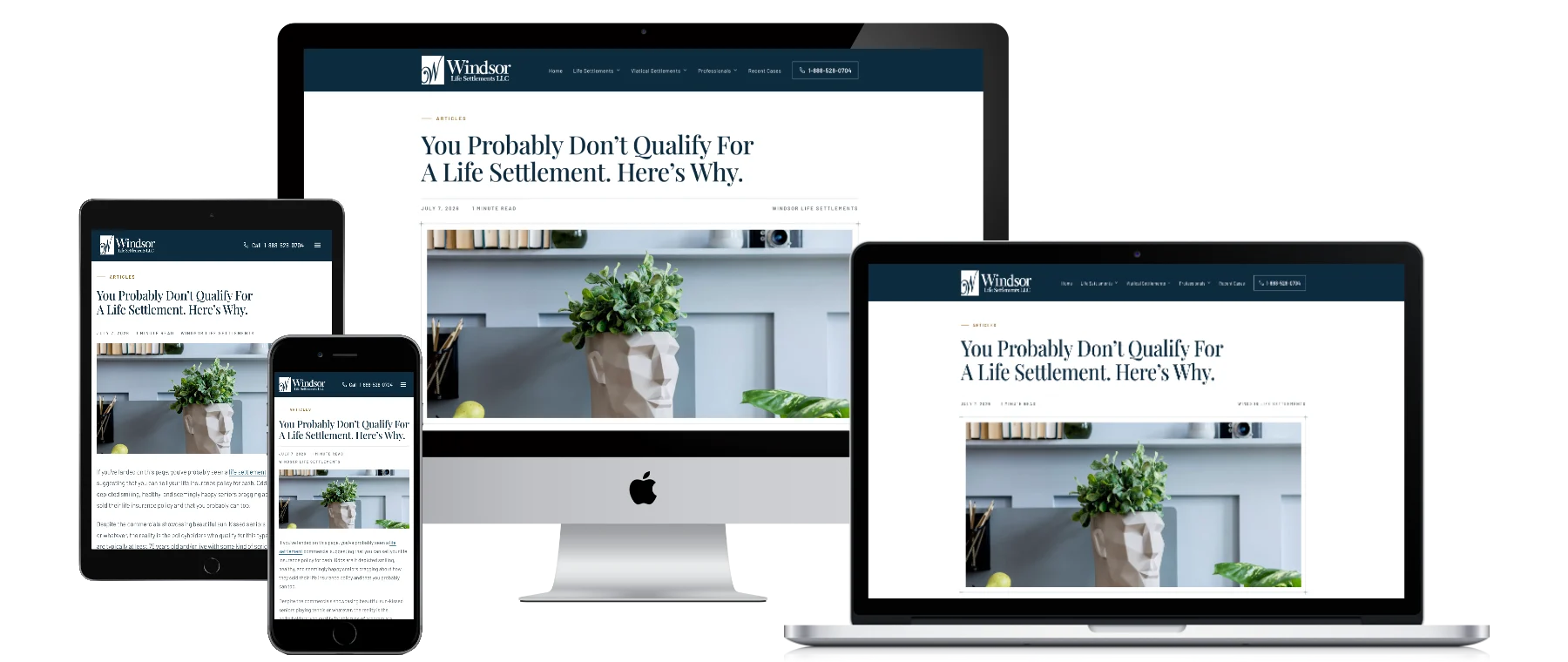
Rankings take months to move. Windsor could not wait months for leads, so a new Google Ads campaign ran alongside the rebuild, built to spend only on people who could actually sell a policy.
The handoff
Paid search is rented space. The traffic stops the day the spend stops, and every click costs more than the last one. Organic rankings are owned. They compound, and they keep paying after the work is done.
Windsor arrived leaning entirely on Google Ads, at 800 to 2,000 paid sessions a month. From the launch of the new site we slowly weaned the account off that reliance, trimming paid as organic grew into the gap. In July 2026 the lines crossed, and the organic visitors stay longer too: 1m 36s a session at a 60% engagement rate.
The results
Organic traffic ran around 250 users a month through the summer of 2025. Once the new site indexed it went to 966 in October, 2,560 in November and 2,291 in December. Search impressions hit 43,977 in January 2026, the highest on record.
Qualified leads in Salesforce reached 73 in January 2026, roughly double the 2025 monthly average.
Eighteen months in, the rankings have held. Search Console puts the average position at 10.2 for the first week of September 2026, and it has sat between 10 and 12 since February. Organic search now brings more sessions than paid. Windsor is no longer renting its place on the results page.
And yes, Google banned our ad. We are counting that as a result too. The safe version of that campaign would have looked like everyone else's, and everyone else's is why Windsor needed us.
“You can't imagine how grateful we are to have found Nick and The Object Group. We've been at this a long time and have never had this level of support before. We finally feel like marketing is taken care of and in good hands so we can focus on our clients and providing fiduciary care for our clients.”
Next case study · No. 01